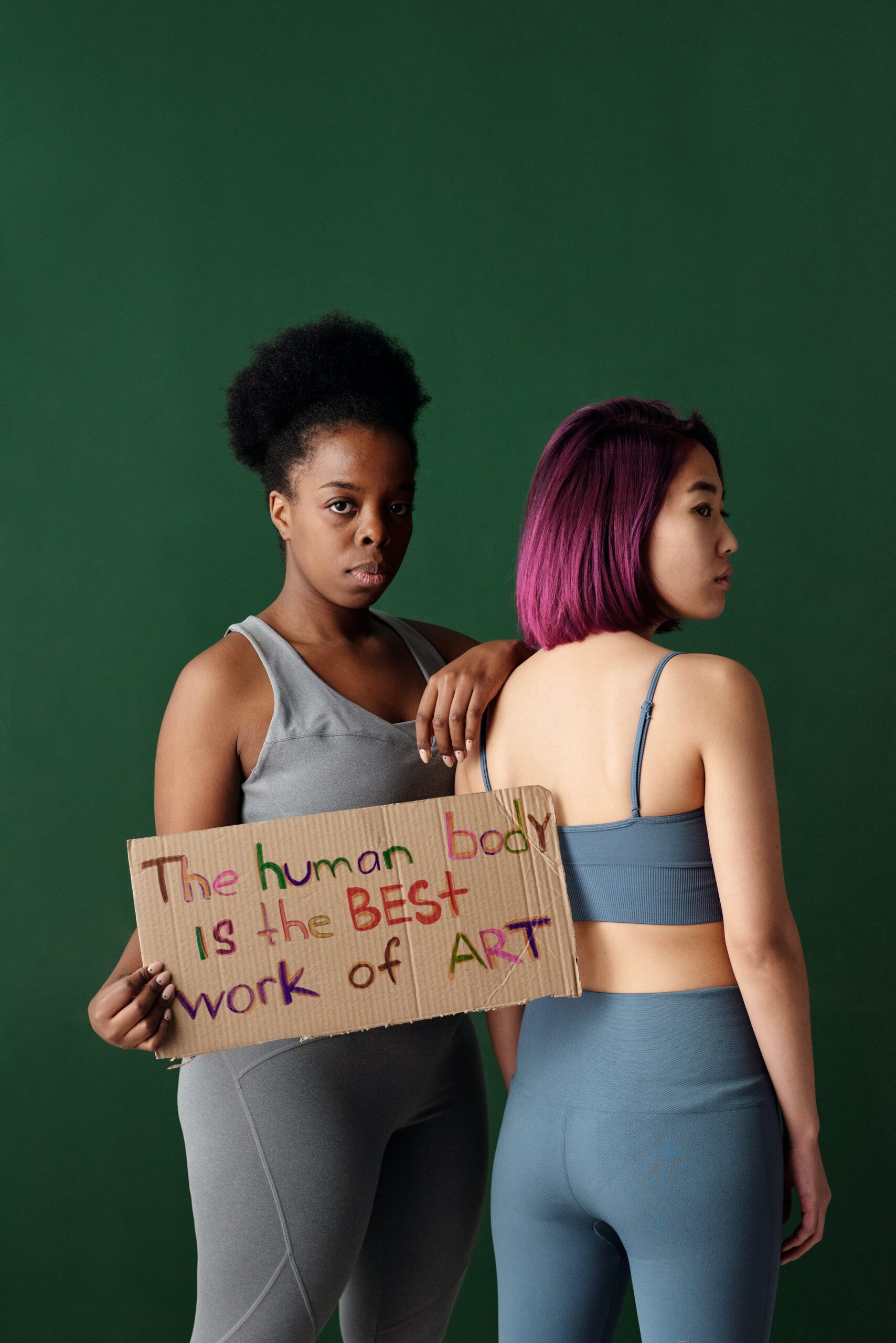
Our Obsession With BMI and the “Perfect” Weight
Everywhere you turn, messages bombard you about losing a few kilos or fixating on the Body Mass Index (BMI). Yet, here’s the thing: health is so much more than what the scale shows. This is diet culture at its finest, and it’s time we call it out.
The Big BMI Misconception
Take BMI, for instance, a simple ratio of weight to height. People often promote BMI as the ultimate health indicator. However, from both personal and professional experience, I’ve seen how BMI falls short. It not only fails to differentiate between muscle and fat, but it also ignores mental well-being, stress management, sleep quality, and your relationship with food.
One of my clients, let’s call her Anna, faced this issue. Although she stayed physically active and ate nutritiously, her BMI unfairly labelled her, which led to unnecessary stress and self-doubt. This situation shows a classic example of weight bias, where people judge others solely based on weight. As a result, stigma and discrimination often follow.
In reality, most people with eating disorders don’t even fit the stereotypical image of being underweight. Surprised? That’s because diet culture pushes a narrow, inaccurate narrative.
Challenging Diet Culture, BMI, and Weight Stigma
Diet culture simplifies complex health issues into catchy phrases like “Eat this, not that.” However, health is far from black and white.
This oversimplification not only fuels a harmful cycle of unhealthy eating habits, body dissatisfaction, and distorted self-image, but it also worsens broader societal issues.
The consequences go beyond physical health. In many cases, the weight stigma people face triggers mental health struggles lowers self-esteem, and can even prevent individuals from seeking necessary medical care due to fear of judgement.
The consequences stretch beyond physical health. Weight stigma often leads to mental health struggles, lowers self-esteem, and even prevents individuals from seeking necessary medical care due to fear of judgement.
It’s a cycle we see all too often, and clearly, it’s time to end it.
FURTHER SUPPORT & HELPFUL RESOURCES IF YOU’RE NAVIGATING A SWEETER RELATIONSHIP WITH FOOD
If you’re looking to learn more about eating disorders, non-diet nutrition, or how to support yourself (or someone you love), these evidence-based organisations offer reliable information:
- National Eating Disorders Collaboration (NEDC)
- InsideOut Institute
- Butterfly Foundation
- Health at Every Size® / ASDAH
- Lifeline
- Kids Helpline
- Emergency Assistance: Call 000
These resources are a great starting point, but they’re not a substitute for personalised, compassionate care.
If you’re wanting individual support, or you’re unsure where to start, you’re always welcome to book a free 15-minute Strategy Call with our team. It’s a pressure-free chat to help you understand what you need and whether we’re the right fit for you.
You don’t have to figure this out alone. We’re here to help you find your Sweet Spot with food.
This blog was written in collaboration with Melissa Joannou, a Nutrition & Dietetic Student and part of the Sweet Spot Health team.
References:
1: https://www.ncbi.nlm.nih.gov/pmc/articles/PMC5100338/
2: https://www.sciencedirect.com/science/article/pii/S0890856715000763